The real cost of stopping to drink
I've been thinking about this since a friend pointed it out on a long ride. Every time you stop for water, you don't just lose the thirty seconds. You lose your rhythm, your heart rate drops and climbs again, and — this is the important part — you start drinking less often to avoid the interruption. Which is precisely backwards, because the point of carrying water is to drink it.
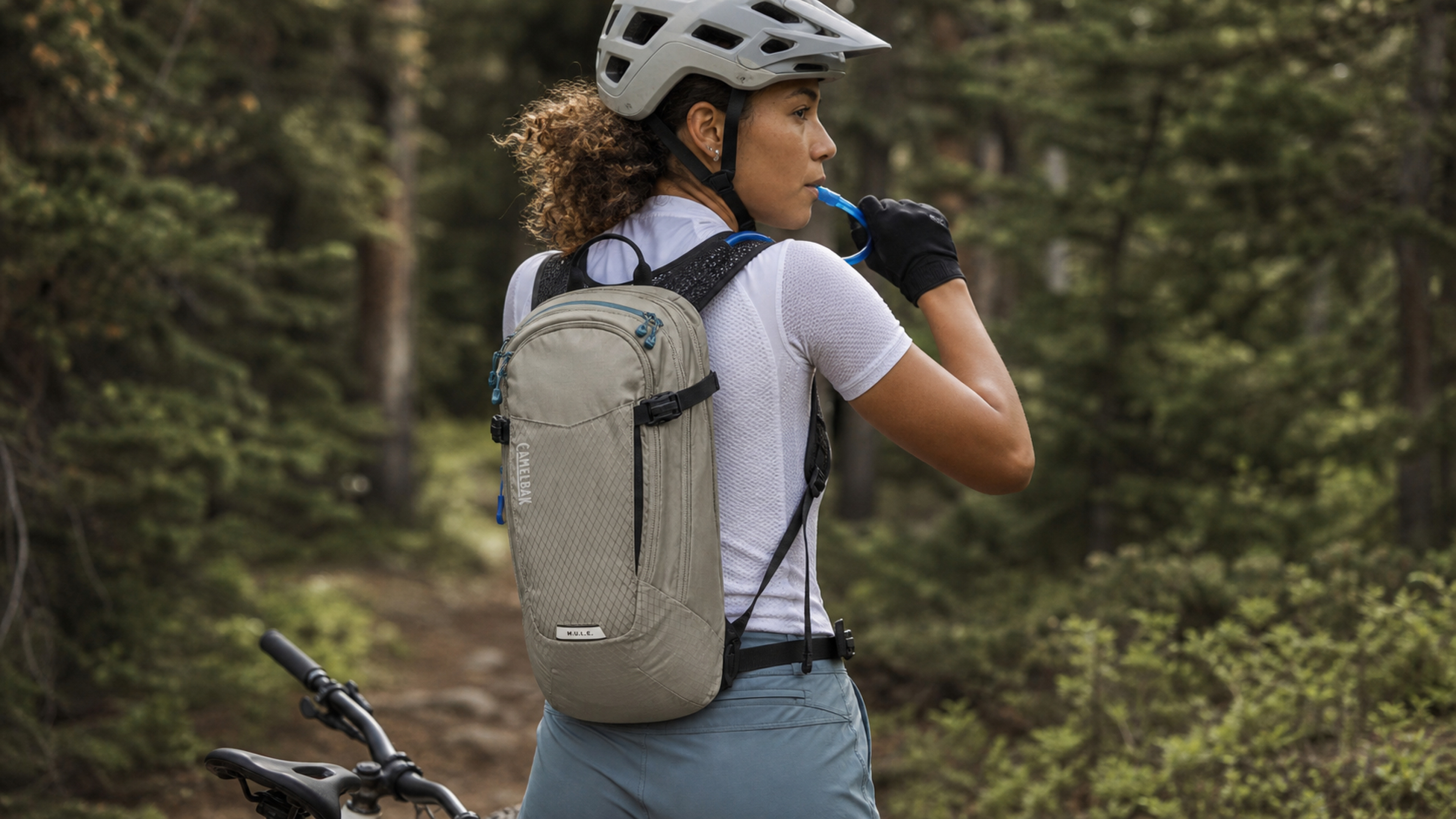
The M.U.L.E. removes the decision entirely. It comes with a hydration reservoir and easy hose access, so a drink costs you nothing at all. No stopping, no rummaging, no negotiating with yourself about whether you're thirsty enough to break stride. Over a long day that changes how well you feel at the end of it more than almost anything else in your pack.
The carry is built around staying out of your way. It's a stable, narrow profile that doesn't catch on branches or shift when you lean into a corner, held in place by a secure sternum strap. The ventilated Air Support back panel keeps some airflow behind you while still supporting the weight of a full reservoir, which is heavier than people expect — a full bladder is a couple of kilos, and it wants to slosh.
Twelve litres sounds small until you see how it's organised. There's dedicated tool storage, which is a small revelation if you've been carrying a multi-tool and a spare tube loose in a main compartment. A stretch overflow pocket takes a shed layer without needing to open anything. And there's helmet carry compatibility for the ride-to-hike days.
For the material side: durable trail materials handle brush and the occasional fall, and there are reflective details for the last stretch home when the light goes earlier than you planned. Neither is glamorous. Both matter.
If you're someone who arrives home from every long day with a headache and a half-full bottle — that's a solvable problem, and this is the solution. Worth doing before your next long one.