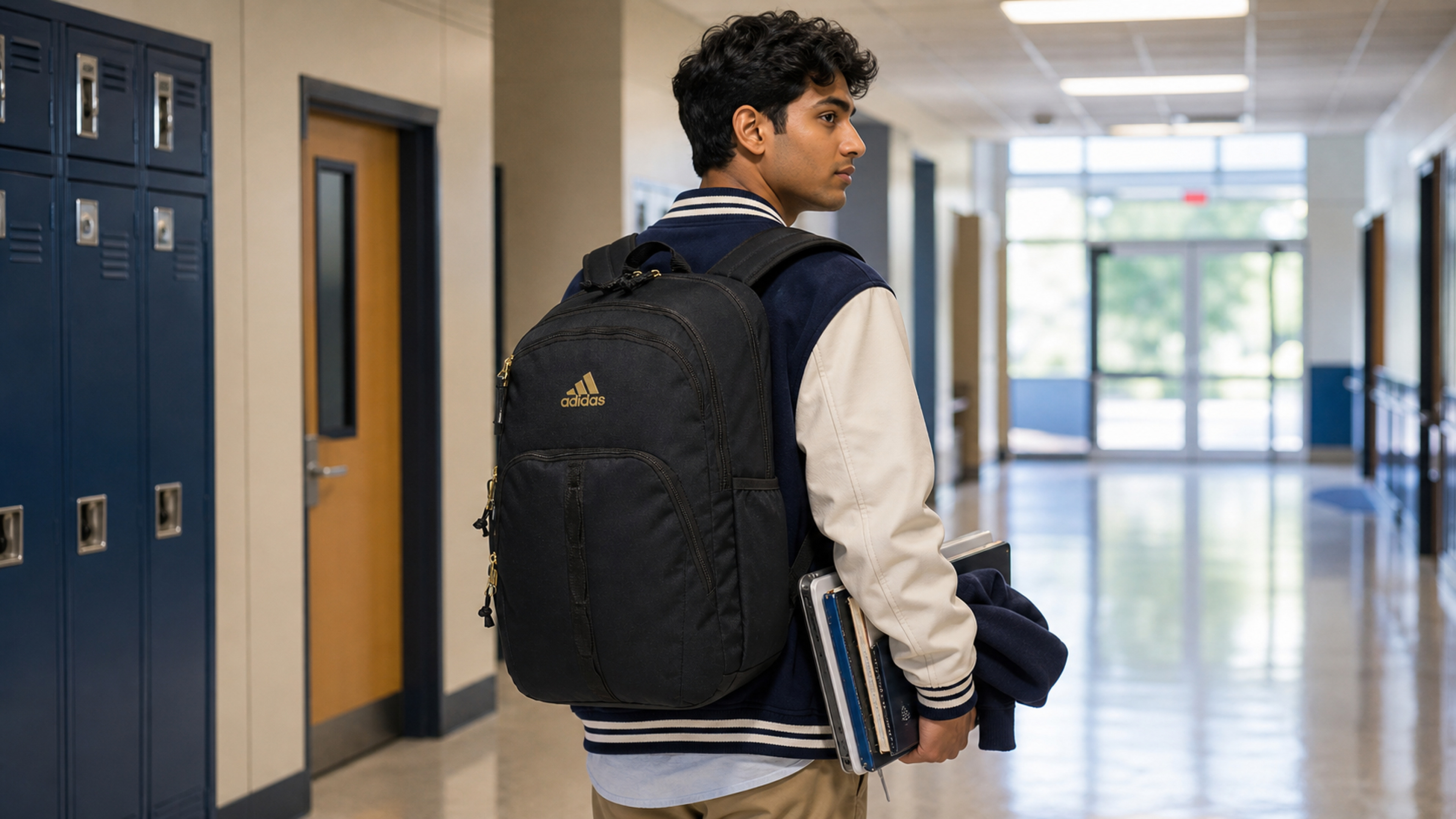
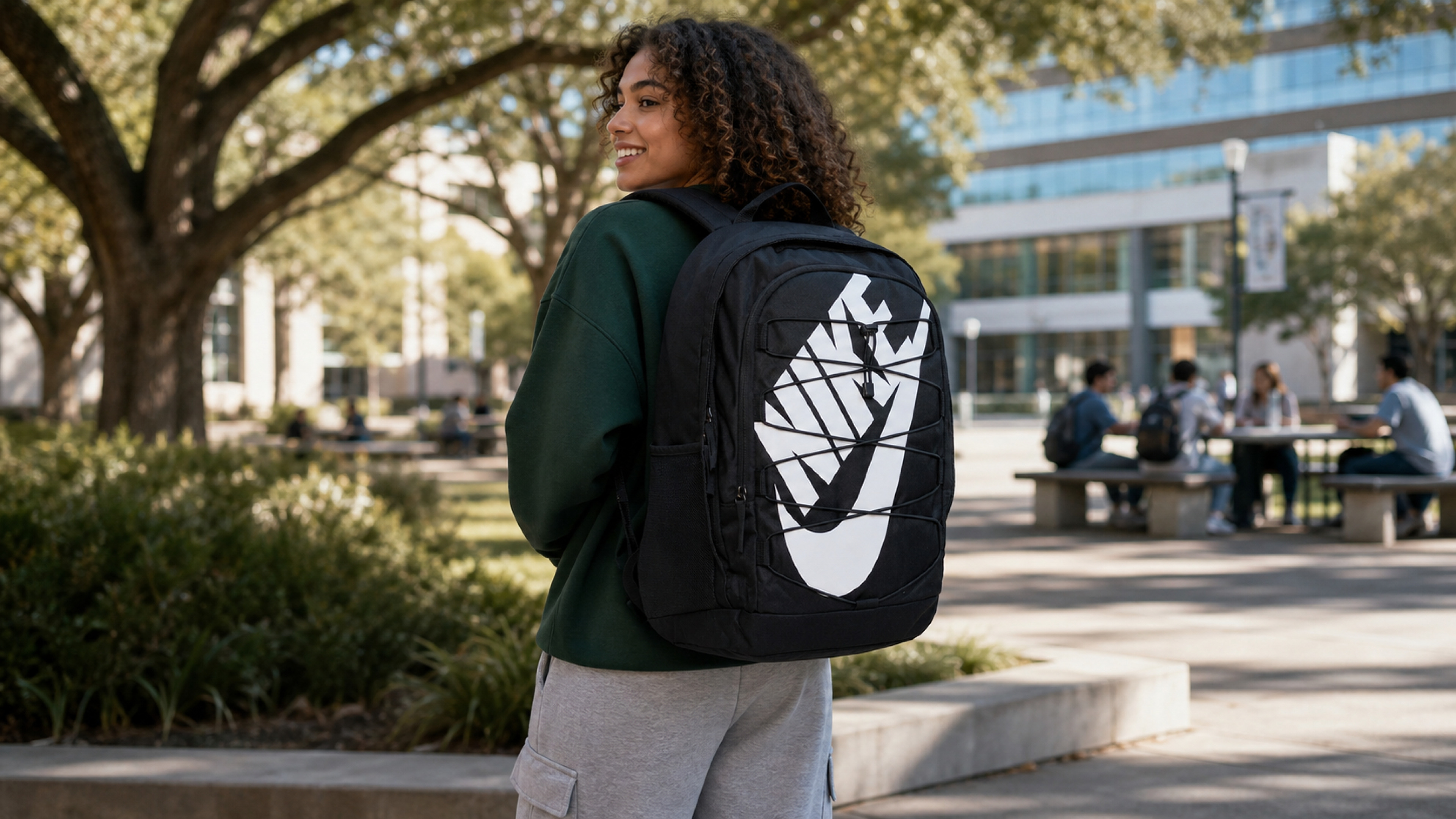
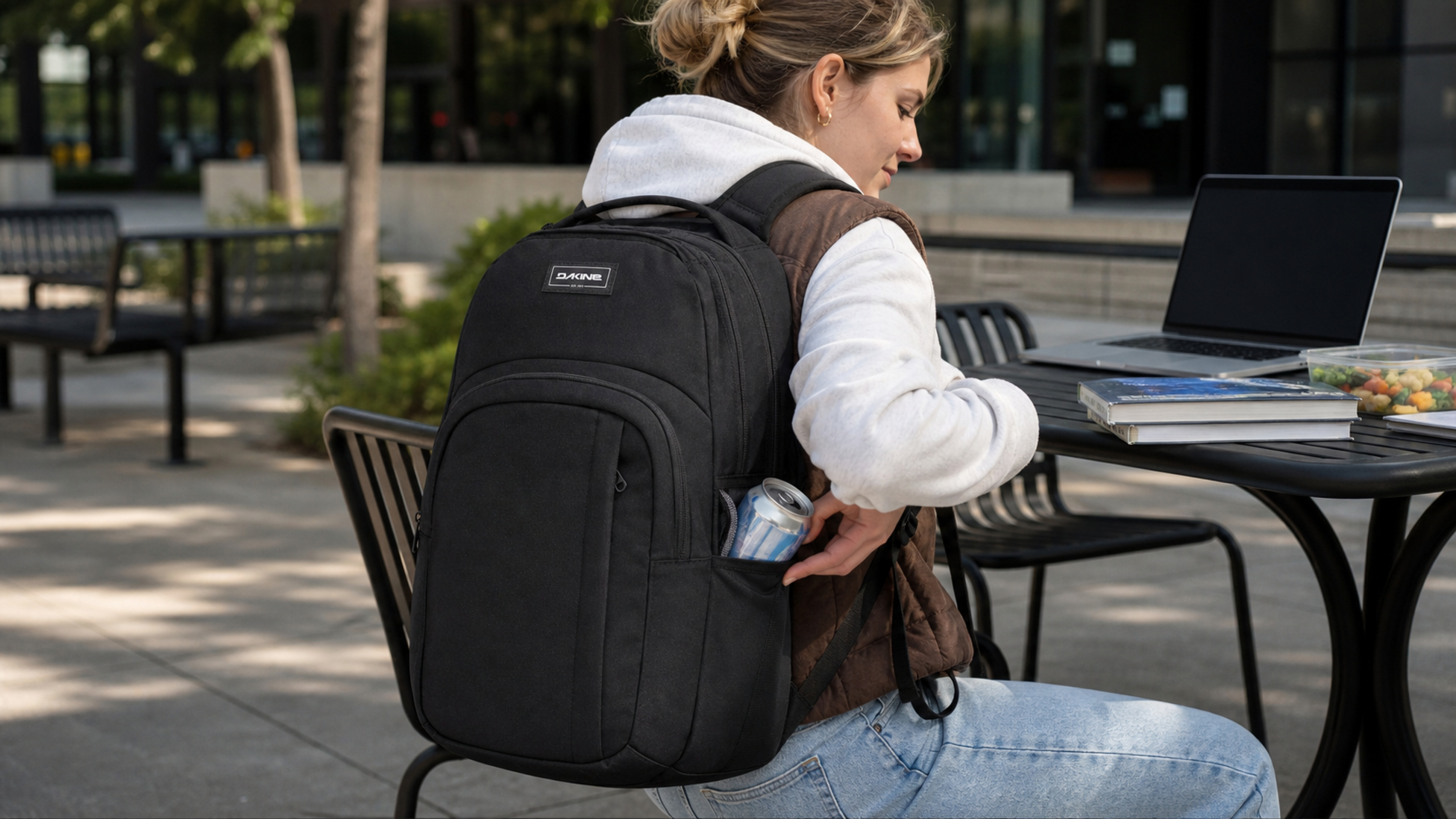
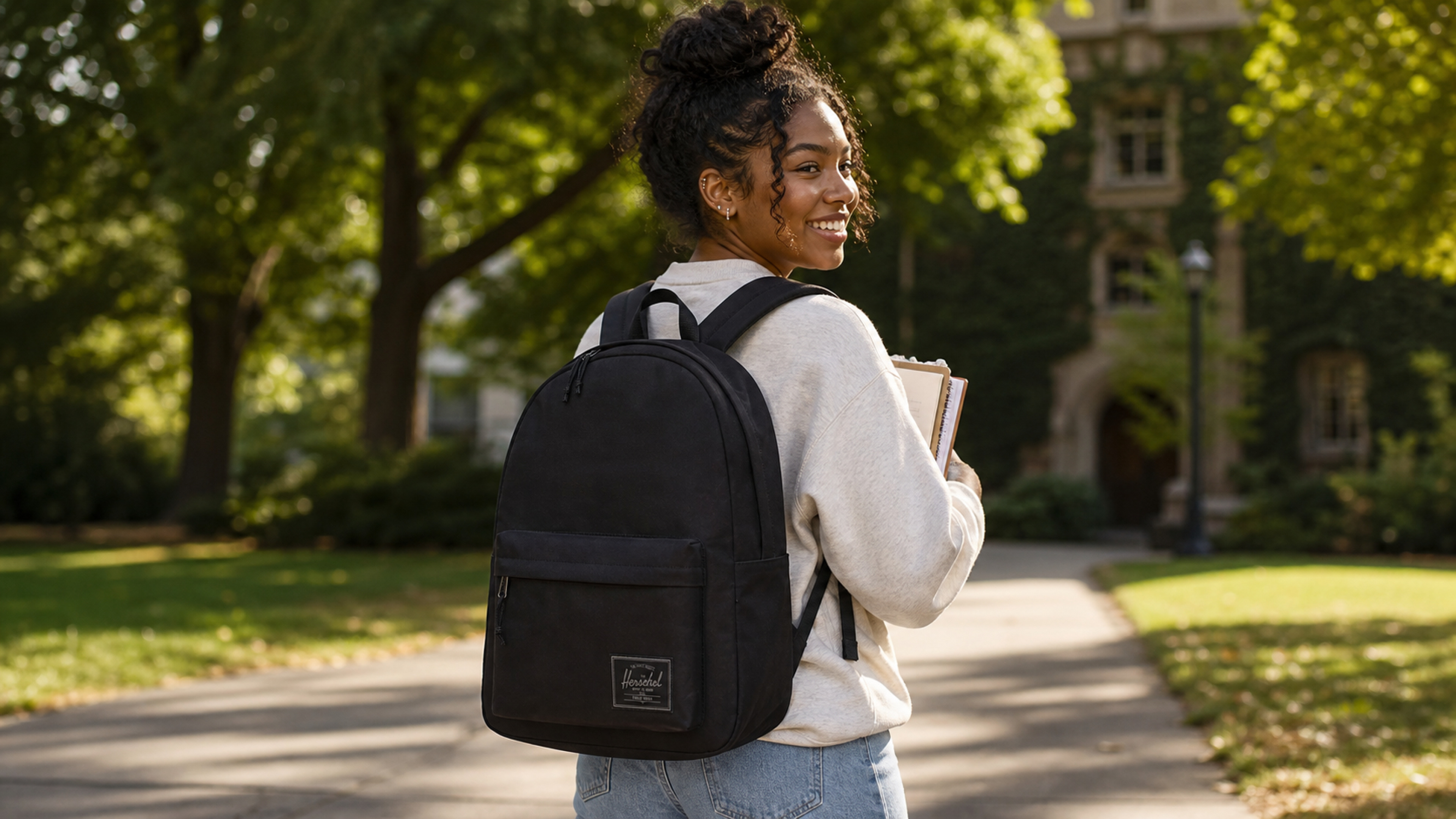
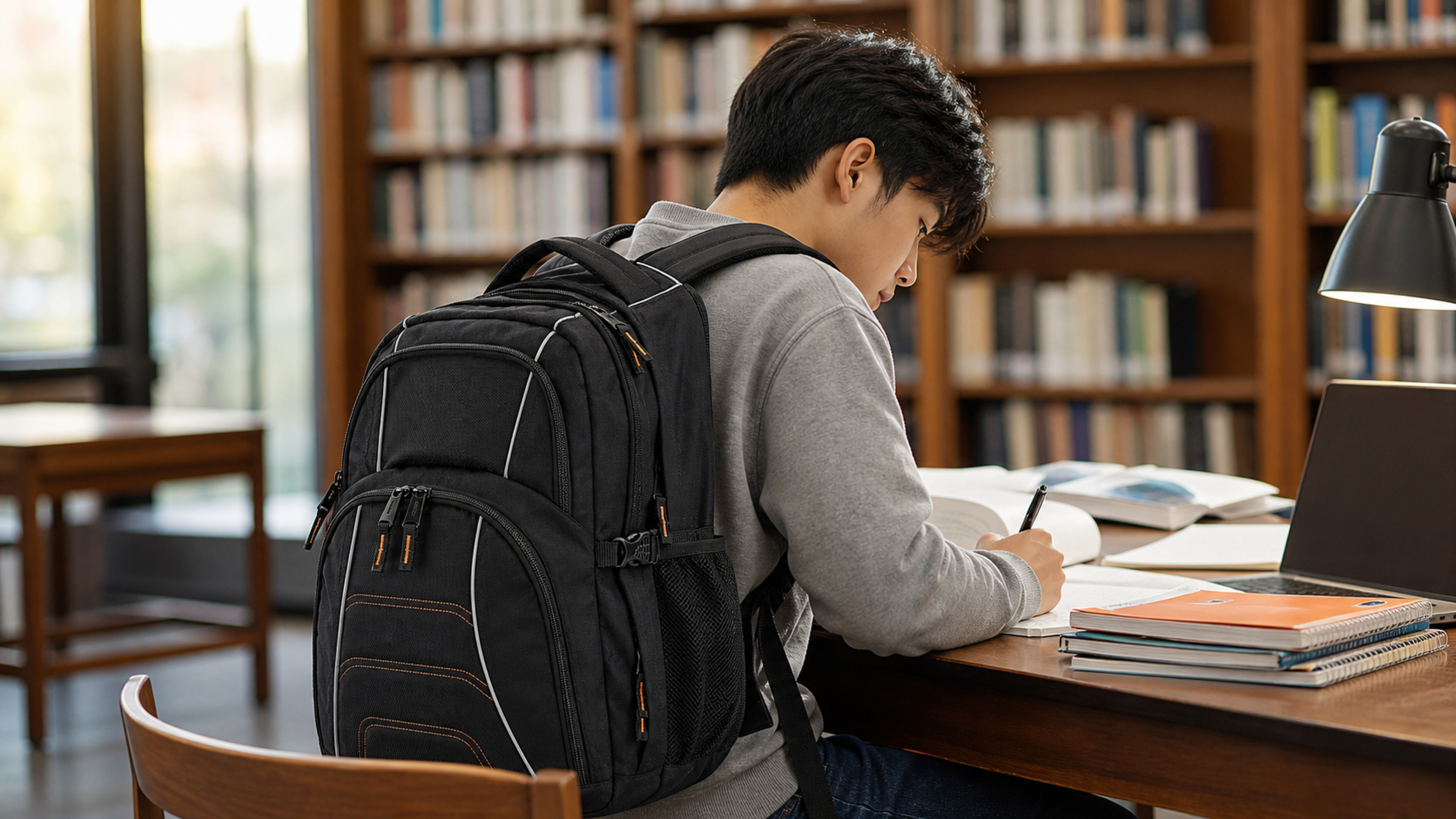
A textbook load is a heavier carry than most day hikes, and nobody plans for it
Something shifted for me once I started paying attention to how students actually carry weight. A full hiking daypack is maybe five or six kilos. A semester's worth of textbooks, a laptop, a tablet and a water bottle can beat that easily — and unlike a hiking pack, most school bags are designed with essentially no load-carrying system at all.
That's the setup for a problem that shows up slowly. Two flat straps taking all the weight, concentrated on a narrow band across the top of each shoulder. Nothing distributing it, nothing stabilising it. So the load swings when you walk, digs when you stand still, and you compensate by leaning forward. Do that five days a week and your body starts to notice.
The Swerve treats the carry as a real problem, which is why it's in this list. Suspension-style shoulder straps spread the load across a wider contact area rather than concentrating it. A padded back panel puts a cushioning layer between you and the hard edges of whatever's inside — and if you've ever had a textbook corner pressing into your spine for a twenty-minute walk, you know exactly why that matters.
Then there's the feature people skip past entirely: compression straps. On a hiking pack, nobody would question them. On a school bag they're rare, and they do exactly the same job. Cinch the load in tight to your back and the weight sits closer to your centre of gravity, which reduces the leverage pulling you backward. It's the single cheapest comfort upgrade available and it costs nothing but ten seconds of tightening.
Storage handles the heavy stuff properly. Large multi-compartment capacity with good heavy-book organization means weight can be distributed across compartments instead of piling into one corner. Field principle that applies here as much as on a trail: heavy items go close to your spine, not out at the back of the bag. Load a textbook against the back panel and a jacket at the front, not the other way round.
Tech gets its own protection — a padded laptop compartment plus a dedicated tablet sleeve, so two screens aren't grinding against each other. Dual bottle pockets keep liquid out of the main compartment entirely. A front organizer panel sorts pens, cables and small items, and there's a media-access pocket for headphone routing.
So here's my case: if you're carrying serious weight every day, buy the bag that has a carry system rather than the one that looks nicest empty. Your shoulders will be the ones tallying up the difference by November. Go take a look at it now, before the term starts.