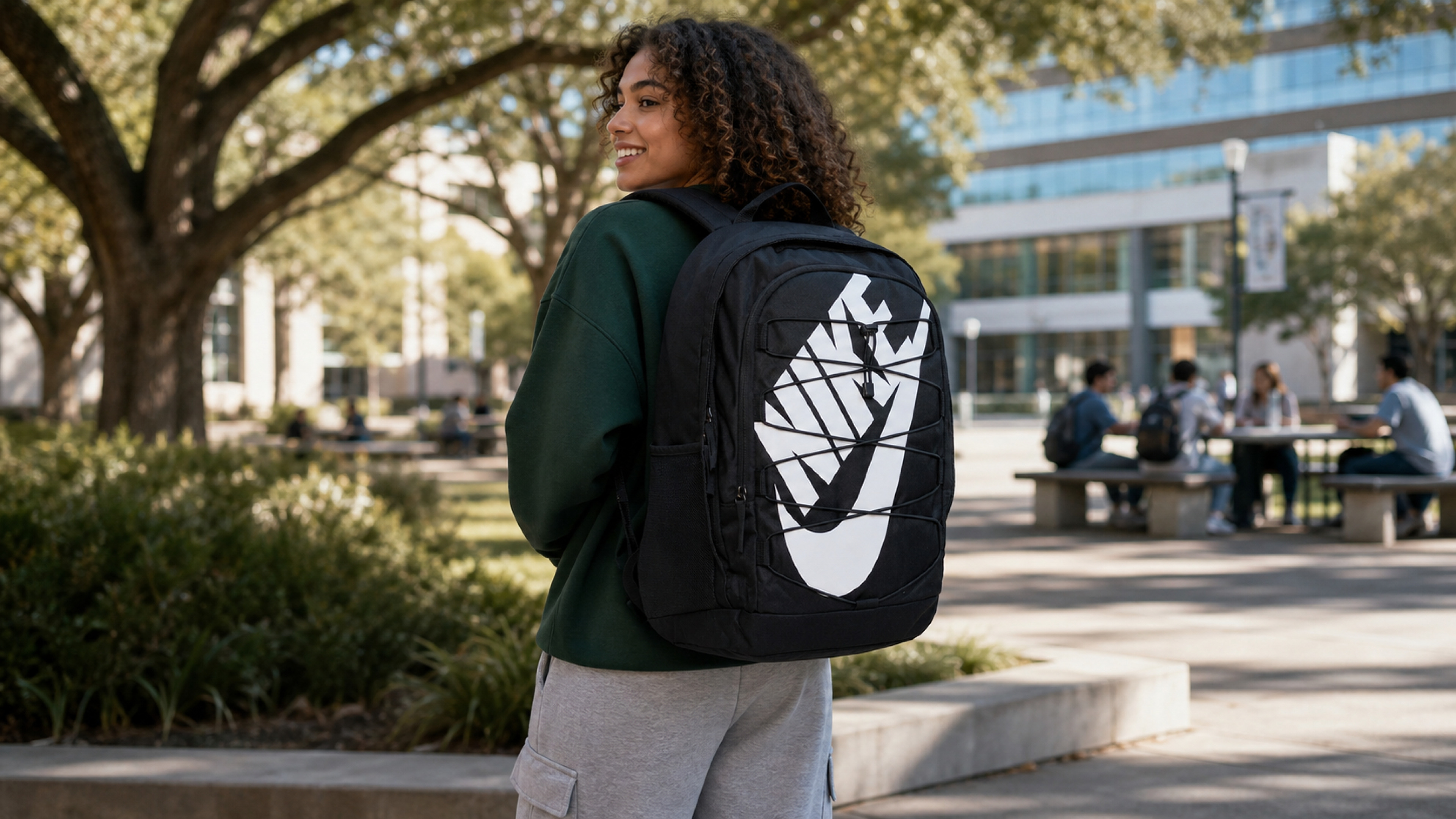
The Hayward's haul loop is a tiny detail and I want to make a case for it
Okay, I know how this sounds. But hear me out, because there's a genuinely interesting engineering point buried in a bag most people buy for the logo.
Here's the problem. Everybody grabs their backpack by the loop at the top. You hook it off a chair, yank it out of a locker, swing it up onto a shoulder. That loop takes the entire loaded weight of the bag as a shock load — a sudden jerk, not a steady pull — dozens of times a week. On most cheap bags it's a strip of webbing stitched through two layers of fabric, and it fails by tearing the fabric around itself rather than by breaking. Once that happens, the hole spreads and the top of the bag is done.
The Hayward 2.0 uses a reinforced haul loop, which spreads that load into the structure instead of concentrating it at four stitch points. It's a small detail with a disproportionate effect on how long the bag survives being handled the way people actually handle bags.
The rest is a well-judged everyday setup. A spacious main compartment that takes books without complaint, an internal laptop sleeve for the machine, and an easy-access front pocket for the things you retrieve constantly. Side bottle pockets keep water outside where a leak is survivable. And the front bungee is genuinely useful — it's an external attachment point for a jacket or a ball, meaning bulky items don't have to go inside and crush everything else.
Padded adjustable straps handle a book-weight load, and the durable woven fabric holds up to the daily abuse of a campus. Clean athletic design, school-and-sport versatility, no drama.
Where I land: this is a well-made ordinary bag with a couple of quietly good structural decisions, and structural decisions are what separate a two-year bag from a five-year one. If you're replacing something that's failing at the top handle right now — that's not a coincidence, and this is the fix. Go grab one.